Showing posts with label rotary actuators. Show all posts

Wednesday, 4 June 2025

Valve Automation Actuators Enhancing Flow Control Through Smart Actuation Solutions

In today’s highly competitive industrial environment, the demand for precision, reliability, and operational efficiency is paramount. Manual valve operation is increasingly being replaced by automated valve systems to reduce downtime, enhance safety, and improve process control. At the heart of these systems lies a range of actuators and accessories designed to automate valves across industries such as oil & gas, water treatment, chemicals, pharmaceuticals, and power generation.

Valve Automation Actuators 

This article explores the key components in valve automation, including Rotary Actuators, Rack & Pinion Actuators, Scotch & Yoke Actuators, Linear Actuators, Diaphragm Actuators, Limit Switch Boxes, and Local Control Stations, and their roles in modern industrial applications.

🔄 What is Valve Automation?

Valve automation refers to the process of using mechanical devices (actuators) to open, close, or modulate valves without manual intervention. These actuators may be powered by electric, pneumatic, or hydraulic sources and can be integrated with control systems for remote operation or automatic response based on process parameters.

🔧 1. Rotary Actuator

A Rotary Actuator converts energy into rotational motion, typically used to automate quarter-turn valves like ball, butterfly, or plug valves. They offer a simple and compact design, fast response time, and minimal maintenance.

Key Features:

  • 90° rotation for on/off operation

  • Compact design for tight installations

  • Suitable for high-speed applications

  • Available in pneumatic, electric, and hydraulic versions

Applications: Water distribution, oil pipelines, HVAC, food and beverage industries

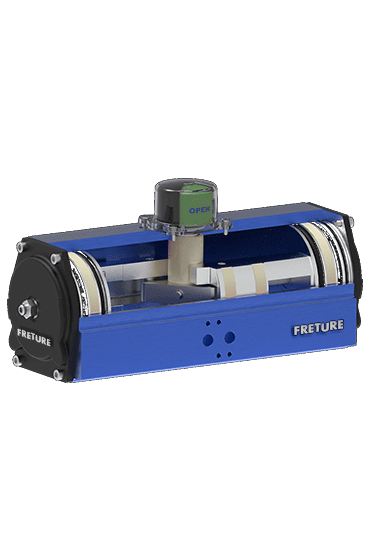
⚙️ 2. Rack & Pinion Actuator

The Rack & Pinion Actuator is a subtype of rotary actuator that uses a rack (linear gear) and pinion (circular gear) to produce torque. It is especially favored for its symmetrical torque distribution and high-speed performance.

Advantages:

  • Precise, repeatable operation

  • Lightweight and cost-effective

  • Double-acting and spring-return models available

  • Easy to mount on ISO-compliant valves

Applications: Chemical dosing systems, batch processing, and high-cycle valve operation

🔁 3. Scotch & Yoke Actuator

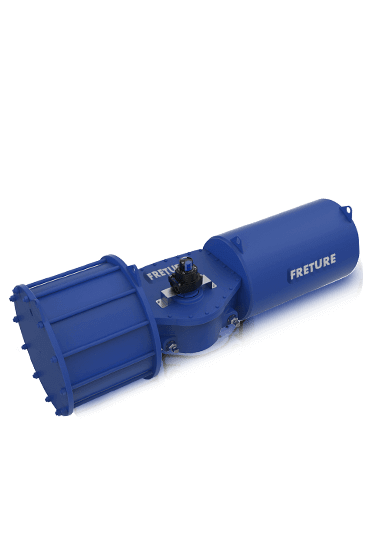
A Scotch & Yoke Actuator is designed for high-torque applications, utilizing a yoke mechanism to convert linear motion into rotary motion. It is often used where heavy-duty or large-diameter valves need to be actuated.

Why Choose Scotch & Yoke:

  • Higher torque at the start and end of the stroke

  • Ideal for valves with tight shut-off requirements

  • Available in pneumatic and hydraulic variants

Industries Used: Oil & gas, mining, power plants, and petrochemicals

↕️ 4. Linear Actuator

Unlike rotary actuators, Linear Actuators provide straight-line (linear) movement, commonly used with gate valves, globe valves, and diaphragm valves. These actuators can be electrically or pneumatically driven.

Key Benefits:

  • Smooth linear motion for modulating control

  • Accurate flow regulation

  • Suited for large-size valves and dampers

Common Applications: Power generation, water treatment, and process control systems

🌬️ 5. Diaphragm Actuator

Diaphragm Actuators are a form of linear actuator that uses air pressure acting on a diaphragm to create motion. They are highly reliable for modulating control and fail-safe shut-off in critical processes.

Features:

  • Fast response and low hysteresis

  • No leakage due to sealed design

  • Commonly used in control valves

Best For: Precision control in pharmaceutical, chemical, and HVAC systems

📦 6. Limit Switch Box

A Limit Switch Box is an essential accessory in valve automation that indicates the open or closed position of a valve. These are often used with PLC systems for remote monitoring.

Why It Matters:

  • Provides valve status feedback

  • Helps in diagnostic and safety logic

  • Available in weatherproof, flameproof, and explosion-proof designs

Application Fields: Refineries, water plants, and hazardous area operations

🕹️ 7. Local Control Station (LCS)

The Local Control Station is an operator interface placed near the valve actuator, allowing manual override or control during maintenance or emergencies. It includes switches, indicators, and sometimes a display unit.

Highlights:

  • Offers local operation and monitoring

  • Emergency shut-down capability

  • Improves system flexibility and safety

Industries Benefiting: Oil & gas, power, marine, and offshore installations

⚙️ Integration with Control Systems

Valve automation systems are often integrated into SCADA, DCS, or PLC systems for remote control and real-time monitoring. Advanced actuators also come with feedback sensors, modulating control options, and smart diagnostics for predictive maintenance.

✅ Benefits of Valve Automation

  • Improved Efficiency: Fast, accurate, and repeatable valve operation

  • Enhanced Safety: Reduces human intervention in hazardous areas

  • Lower Operational Costs: Reduced downtime and maintenance

  • Remote Monitoring: Real-time data and diagnostics

  • Precise Control: Ideal for process modulation and flow regulation

🏭 Industries Using Valve Automation

  • Oil & Gas

  • Chemical & Petrochemical

  • Water & Wastewater Treatment

  • Pharmaceuticals

  • Power Generation

  • Food & Beverage

  • Pulp & Paper

Conclusion

Valve automation Actuators has transformed process control by offering faster response times, increased accuracy, and reduced manual intervention. Whether you require a robust Scotch & Yoke actuator for a large pipeline valve or a limit switch box to monitor valve status, the right automation solution can significantly enhance operational reliability.

Manufacturers and plant engineers must carefully evaluate their application needs—including torque, speed, environmental conditions, and control strategy—before selecting actuators and accessories. Choosing high-quality, industrial-grade components ensures long-term performance, safety, and compliance with international standards.

Wednesday, 11 December 2024

Rack & Pinion Actuators

Rack and pinion actuators are essential components in various mechanical systems, known for their efficiency in converting rotary motion into linear motion. These actuators play a critical role in numerous applications, including automotive steering systems, industrial machinery, and robotics. This article delves into the mechanics, applications, advantages, and considerations associated with rack and pinion actuators.

What Are Rack & Pinion Actuators?

A Rack and Pinion actuator consists of two main components: a rack (a linear gear) and a pinion (a circular gear). The pinion is attached to a shaft, which is driven by a motor. As the motor turns the pinion, it engages with the rack, causing the rack to move linearly. This mechanism enables precise control of motion, making them popular in various engineering applications.

Working Principle

The operational principle behind this actuators is straightforward. When the pinion rotates, its teeth mesh with the teeth of the rack. The rotation of the pinion translates into linear motion of the rack, allowing for accurate positioning. By adjusting the rotation speed of the pinion, the speed and position of the rack can be controlled with high precision.

Applications

They are utilized in various sectors, showcasing their versatility and reliability:

  1. Automotive Industry: One of the most common uses is in the steering mechanisms of vehicles. The actuator translates the driver’s steering input into the corresponding movement of the wheels, providing precise steering control.

  2. Industrial Automation: In factories, these actuators are employed in conveyor systems, robotic arms, and automated assembly lines. Their ability to provide linear motion with high accuracy makes them ideal for repetitive tasks.

  3. CNC Machines: Rack and pinion systems are frequently used in computer numerical control (CNC) machining tools, where they allow for precise control over the movement of cutting tools, enhancing productivity and accuracy.

  4. Material Handling: In warehouses and logistical operations, these actuators aid in the movement of heavy loads along predetermined paths, ensuring efficient material transport.

  5. Robotics: They are integral to robotic systems, enabling them to perform tasks with a high degree of precision, such as pick and place operations.

Advantages

Numerous advantages make them a preferred choice in many applications:

  • High Efficiency: Rack and pinion systems boast high efficiency in converting rotary motion to linear motion, minimizing energy losses.

  • Precision: These actuators offer precise control over motion, ensuring that tasks are performed accurately and consistently.

  • Durability: Made from robust materials, they are designed for longevity, even in demanding environments.

  • Compact Design: Due to their simple design, they can be integrated into a variety of mechanical systems without requiring excessive space.

Considerations When Choosing Rack & Pinion Actuators

While they offer numerous benefits, several factors need to be considered when selecting them for specific applications:

  • Load Capacity: The actuator’s ability to handle the required load is critical. Assessing the load capacity ensures that the actuator can perform efficiently over time.

  • Speed Requirements: Different applications may have varying speed demands. Selecting an actuator that meets these speed requirements is essential.

  • Environment: The surrounding environment such as temperature, humidity, and exposure to chemicals can impact the actuator's performance. Choosing materials and designs that withstand specific environmental conditions is advisable.

  • Maintenance: Regular maintenance is crucial for optimizing the actuator’s lifespan and performance. Understanding the maintenance requirements is essential for long-term efficiency.

Conclusion

Rack and pinion actuators represent a significant advancement in mechanical engineering, providing efficient and precise motion control across various applications. Their ability to convert rotary motion into linear motion makes them indispensable in modern machinery, robotics, and automotive systems. By understanding their features, applications, and considerations, industries can make informed decisions when integrating these actuators into their operations.

Freture Techno is a leading rack and pinion actuators manufacturer in India, committed to delivering high-quality solutions tailored to meet diverse industrial needs.

Wednesday, 9 August 2023

Valve Automation and the Innovative Advancement of Gas Over Oil Actuators

In the intricate world of fluid control systems, valve automation plays a pivotal role in optimizing industrial processes for efficiency, safety, and precision. Furthermore, the emergence of Gas Over Oil (GOO) technology has revolutionized the way we approach valve actuation, offering a more environmentally friendly and cost-effective alternative to traditional methods. This article explores the significance of valve automation and delves into the innovative realm of Gas Over Oil actuators, highlighting its benefits and applications in various industries.

Valve Automation: Enhancing Efficiency and Control

Valves serve as gatekeepers within pipelines and industrial systems, regulating the flow, pressure, and direction of fluids. Manual operation of valves can be labor-intensive, time-consuming, and susceptible to errors. Here's where valve automation steps in, transforming these essential components into intelligent devices that can be controlled remotely or programmed to respond to specific conditions.

Pneumatic Scotch & Yoke Actuator manufacturer in Mumbai, India

Automated valves offer several advantages:

Precision and Consistency: Automated valves can be controlled with exceptional accuracy, ensuring consistent and repeatable performance, which is crucial for industries like manufacturing and chemical processing.

Safety Enhancement: By reducing the need for manual intervention, automated valves minimize the risk of human error, enhancing workplace safety and preventing potential accidents.

Operational Efficiency: Valve automation enables quicker response times, reduces downtime for maintenance, and improves overall operational efficiency, translating into cost savings.

Remote Monitoring and Control: With advancements in IoT technology, automated valves can be remotely monitored, diagnosed, and adjusted, allowing for real-time decision-making and problem-solving.

Gas Over Oil (GOO) Actuators: A Greener Alternative

Gas Over Oil (GOO) Actuators is a cutting-edge innovation that has transformed valve actuation by utilizing gas pressure to generate the necessary force for valve movement, rather than traditional hydraulic oil. This environmentally friendly approach offers several key benefits:

Reduced Environmental Impact: GOO Actuators eliminates the risk of oil leakage or contamination, minimizing environmental hazards and contributing to a cleaner and safer working environment.

Energy Efficiency: GOO systems require less energy to operate, resulting in reduced power consumption and lower operational costs.

Compact Design: The absence of hydraulic oil reduces the overall size and weight of the actuation system, making it a more space-efficient solution.

Maintenance Simplification: GOO systems have fewer components and require less maintenance, leading to reduced downtime and extended equipment life.

Applications Across Industries

Valve automation, including Gas Over Oil actuators, finds diverse applications across industries:

Oil and Gas: In the oil and gas sector, valve automation ensures precise control of fluid flow, preventing leaks and optimizing production processes.

Water Treatment: Automated valves manage the distribution of water, chemicals, and wastewater, improving treatment efficiency and maintaining water quality.

Power Generation: Valve automation plays a critical role in power plants, regulating steam and cooling water flow to enhance energy production and efficiency.

Pharmaceuticals: In pharmaceutical manufacturing, automated valves maintain stringent control over sterile environments and fluid transfer processes.

Chemical Processing: Industrial Valve automation enables accurate dosing and mixing of chemicals, enhancing product quality and process safety.

Gas Over Oil actuators exemplify the evolution of fluid control systems, ushering in a new era of efficiency, safety, and environmental responsibility. As industries continue to demand precise control, reduced downtime, and sustainable solutions, these innovations are poised to shape the future of industrial processes. By embracing the power of automation and environmentally conscious technologies like Gas Over Oil Actuators, industries are taking significant strides towards a more optimized and sustainable future.

Unveiling the Power and Precision of Rack & Pinion Actuators

 In the world of engineering and industrial automation, precision and control are paramount. One essential component that plays a pivotal role in achieving this is the Rack & Pinion Actuator. This ingenious mechanical device has quietly revolutionized various industries, enabling precise motion control, reliable operation, and enhanced efficiency. In this article, we delve into the inner workings, applications, and benefits of Rack & Pinion Actuators.

Understanding Rack & Pinion Actuators

At its core, a Rack & Pinion Actuator is a mechanical system that translates rotary motion into linear motion. The mechanism consists of two main components: the rack, which is a linear gear-like component, and the pinion, a small gear that meshes with the rack. As the pinion rotates, it engages with the rack, converting the rotational force into a linear displacement.

Key Components and Mechanism

Rack: The rack is a toothed bar with a straight profile. Its teeth mesh with the teeth of the pinion gear, allowing for controlled linear movement.

Pinion: The pinion gear is attached to a rotary actuator, such as a motor or a hydraulic cylinder. When the pinion rotates, it engages with the rack, causing it to move along its linear path.

Applications Across Industries

Rack & Pinion Actuators find versatile applications across a wide range of industries, owing to their precision and reliability:

Industrial Automation: In manufacturing and assembly lines, these actuators are used to precisely position components, manipulate machinery, and control processes.

Valve Control: Rack & Pinion Actuators are extensively employed in the oil and gas, water treatment, and chemical industries to control the opening and closing of valves.

Automotive: They play a role in various automotive applications, such as steering systems, seat adjustments, and transmission control.

Aerospace: In aircraft and spacecraft, these actuators are essential for controlling flaps, landing gear, and other critical mechanisms.

Robotics: Rack & Pinion Actuators are integral to the movement and manipulation of robotic arms, enhancing their precision and range of motion.

Pneumatic Rack & Pinion Actuator

Advantages of Rack & Pinion Actuators

Precision: The mechanical engagement between the rack and pinion ensures precise linear motion control, making them ideal for applications requiring accurate positioning.

Compact Design: Rack & Pinion Actuators are known for their compact size and efficient use of space, making them suitable for installations with limited room.

High Force Output: They offer high force output relative to their size, allowing them to handle heavy loads and demanding tasks.

Reliability: With fewer moving parts, these actuators are known for their durability and minimal maintenance requirements.

Cost-Effectiveness: Their robust design and longevity contribute to cost-effective operations over the long term.

Rack & Pinion Actuators stand as a testament to the brilliance of mechanical engineering, transforming rotary motion into precise linear movement across various industries. From manufacturing floors to outer space, these actuators play a silent but crucial role in enabling complex processes, enhancing control, and driving efficiency. As technology continues to advance, the humble Rack & Pinion Actuator continues to be a cornerstone of innovation, powering the machinery and mechanisms that shape our modern world.

Valve Automation Actuators Enhancing Flow Control Through Smart Actuation Solutions

In today’s highly competitive industrial environment, the demand for precision, reliability, and operational efficiency is paramount. Manual...