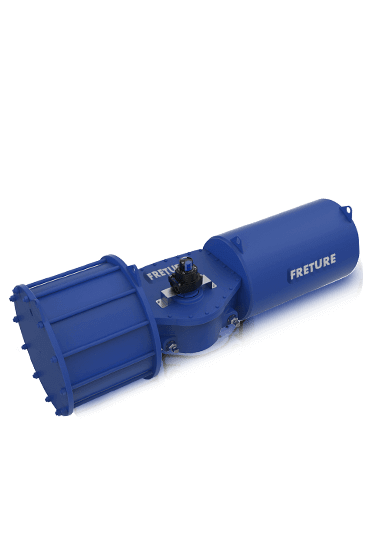
Showing posts with label Freture Techno. Show all posts

Thursday, 26 September 2024

Industrial Linear Actuators How They Work and Their Advantages

Industrial linear actuators are essential components used in a wide range of applications to convert rotational motion into linear motion. From automation in manufacturing to precise positioning systems in the healthcare and automotive industries, these devices provide the accuracy and power needed to move heavy loads smoothly and efficiently. In this article, we will explore how industrial linear actuators work, their key advantages, and why they are critical to modern industry.

How Industrial Linear Actuators Work

At their core, industrial linear actuators operate by converting energy (typically electrical, hydraulic, or pneumatic) into linear motion. This is achieved through a motor that drives a screw, belt, or hydraulic cylinder, depending on the type of actuator. The two most common mechanisms are:

  1. Screw Mechanism: Linear actuators using screw mechanisms often operate based on a lead screw or ball screw principle. The motor’s rotational energy turns the screw, which moves a nut attached to the load in a linear direction. This method is widely known for its accuracy and is frequently used in applications requiring precise control.

  2. Belt or Chain Mechanism: In this type, the motor moves a belt or chain to shift the load in a linear path. These actuators are typically employed in scenarios where speed is more critical than precision, such as conveyor systems.

  3. Hydraulic and Pneumatic Actuators: For heavy-duty applications, hydraulic and pneumatic actuators are preferred. These systems utilize pressurized fluids (hydraulics) or compressed air (pneumatics) to push or pull a piston, which, in turn, moves the load. These types are commonly used in industries such as construction, where powerful force is needed.
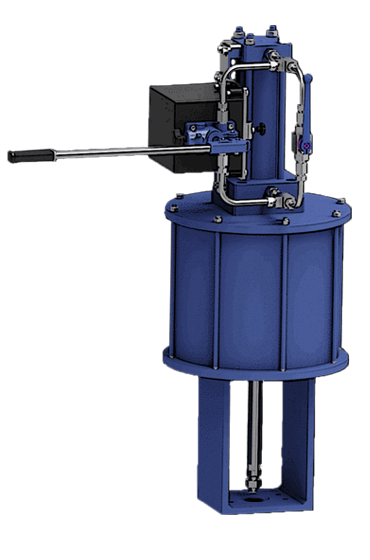
https://www.freture.com/valve-automation-actuator/industrial-linear-actuator/

Key Components of Linear Actuators

While the working mechanism may differ, all industrial linear actuators typically have three key components:

  1. Motor: Responsible for generating the rotational force required to drive the actuator.
  2. Drive Mechanism: This converts the motor’s rotational motion into linear motion. As mentioned, this can be a lead screw, belt, or hydraulic cylinder, depending on the design.
  3. Control System: Most modern actuators feature built-in control systems, allowing for precise movement, speed control, and even feedback mechanisms for accuracy.

Advantages of Industrial Linear Actuators

The versatility and reliability of industrial linear actuators have made them indispensable in many industries. Below are some of the core advantages they offer:

  1. Precision and Accuracy: One of the primary advantages of industrial linear actuators is their ability to provide high levels of precision and repeatability. This is particularly important in sectors such as manufacturing, healthcare, and aerospace, where exact positioning is essential for safety and operational efficiency. Linear actuators allow machines and equipment to move loads with millimeter-level accuracy, ensuring consistent and reliable performance.

  2. Flexibility in Application: Industrial linear actuators are highly customizable, with various models available to suit specific industrial requirements. From handling lightweight loads to moving massive equipment in harsh conditions, they offer unparalleled versatility. Electric linear actuators, for instance, can be programmed for different motion profiles, speeds, and torque levels, making them ideal for complex automation systems.

  3. High Load Capacity: Depending on the type, industrial linear actuators can handle significant loads. Hydraulic actuators, in particular, can deliver substantial force, making them suitable for heavy-duty applications in industries such as mining, construction, and manufacturing. Additionally, ball screw-driven actuators can manage high loads while maintaining precision.

  4. Energy Efficiency: Electric linear actuators are known for their energy efficiency, especially compared to hydraulic or pneumatic systems. These actuators only consume power when movement is needed, making them more efficient and environmentally friendly. This contributes to lower operating costs and improved energy savings for industrial applications.

  5. Durability and Low Maintenance: Built for industrial environments, linear actuators are designed to withstand heavy use, extreme temperatures, and exposure to corrosive materials. Most industrial actuators are made from robust materials like stainless steel or aluminum, offering high durability. Furthermore, linear actuators have fewer moving parts than other mechanisms, such as rotary systems, resulting in reduced wear and tear and lower maintenance requirements.

  6. Automation and Integration: Industrial linear actuators play a crucial role in automation. They can easily be integrated into automated systems using sensors, controllers, and feedback mechanisms. This enables industries to implement precise, repeatable processes that require minimal human intervention, improving productivity and reducing the likelihood of errors.

Applications in Various Industries

The advantages mentioned above make industrial linear actuators ideal for several critical industries. Some examples of where they are frequently used include:

  • Manufacturing: For automating processes such as assembly lines, packaging, and CNC machinery.
  • Healthcare: In hospital beds, medical devices, and rehabilitation equipment that require precise movement.
  • Automotive: In automated assembly, robotic arms, and ergonomic tools.
  • Aerospace: For controlling flaps, landing gear, and other critical components in aircraft.
  • Renewable Energy: In solar panel tracking systems, ensuring optimal positioning for energy generation.

Freture Techno Pvt. Ltd.: Leading Manufacturer of Industrial Linear Actuators in Mumbai, India

When it comes to high-performance industrial linear actuators, Freture Techno Pvt. Ltd. stands as a leading manufacturer in Mumbai, India. With a strong focus on quality, precision engineering, and innovation, Freture Techno provides a wide range of linear actuators designed to meet the rigorous demands of modern industries. Whether you need solutions for automation, precision control, or heavy-duty applications, Freture Techno offers products tailored to your specific needs.

Their commitment to excellence and customer satisfaction has made them a trusted partner in the industrial automation landscape, providing efficient, reliable, and cost-effective solutions for clients across diverse sectors.

In conclusion, industrial linear actuators play a vital role in improving the efficiency, accuracy, and productivity of industrial operations. As industries continue to advance, the demand for robust and precise linear actuators will only grow, with companies like Freture Techno Pvt. Ltd. leading the way in providing cutting-edge solutions.

Wednesday, 9 August 2023

Unveiling the Ingenious Mechanics of the Scotch & Yoke Actuator

In the realm of mechanical engineering, innovation knows no bounds. Among the many ingenious inventions that power industries, the Scotch & Yoke actuator stands as a testament to human creativity and problem-solving. This article dives into the mechanics, functionality, and applications of the Scotch & Yoke actuator, shedding light on its pivotal role in precision control and automation.

The Scotch & Yoke Actuator: An Overview

The Scotch & Yoke actuator is a mechanical device designed to convert rotary motion into linear motion through a unique and elegant mechanism. It derives its name from its distinctive components – the Scotch yoke and the sliding block or slider. This actuator has been a trusted workhorse in industries that require linear motion control with high accuracy and reliability.

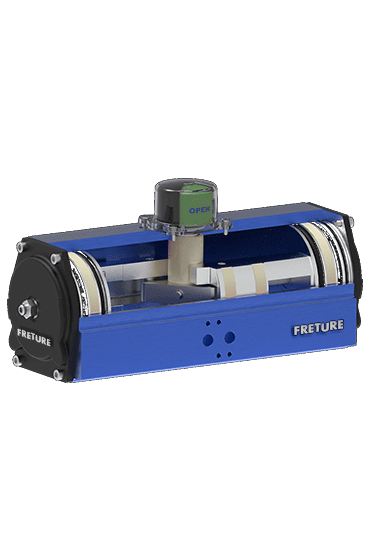
Pneumatic Rack & Pinion Actuator manufacturer in Mumbai

Mechanics and Operation

The heart of the Scotch & Yoke actuator lies in the Scotch yoke mechanism, which translates the circular motion of a rotary input into linear motion. The yoke itself is a mechanism shaped like the letter "Y," with one end connected to the rotating input and the other end attached to a slider. As the input rotates, the yoke moves in a reciprocating manner, pushing and pulling the slider along a straight path.

This simple yet effective mechanism ensures smooth and precise linear motion. The key to its accuracy lies in the relationship between the radius of the yoke arm and the input angle – a fundamental principle that governs its operation.

Applications Across Industries

The Scotch & Yoke actuator finds applications in a diverse range of industries, contributing to efficient and controlled motion in various systems:

Valve Control: One of the primary applications of Scotch & Yoke actuators is in valve control systems. They are used to operate control valves, regulating the flow of fluids in pipelines, process industries, and oil and gas installations. The robust and reliable nature of these actuators makes them ideal for critical valve control tasks.

Industrial Automation: In industrial settings, Scotch & Yoke actuators play a crucial role in automating processes such as material handling, packaging, and conveyor systems. Their precision and repeatability ensure consistent performance and increased productivity.

Energy and Power Generation: These actuators are utilized in power plants to control dampers, louvers, and other mechanisms that require linear motion. Their ability to handle heavy loads and provide precise control makes them essential in energy production and distribution.

Marine and Offshore: Scotch & Yoke actuators are found in marine applications, including shipboard systems, offshore platforms, and underwater equipment. Their reliability and resistance to harsh environments make them well-suited for these demanding settings.

Advantages and Future Innovations

The Scotch & Yoke actuator offers several advantages, including high mechanical efficiency, simple design, and reliable operation. Its inherent symmetry minimizes side loads, reducing wear and enhancing longevity. Furthermore, its compact size and robustness make it suitable for installations with space constraints.

As technology advances, innovations in materials and manufacturing techniques are likely to further enhance the performance and capabilities of Scotch & Yoke actuators. Integration with digital control systems, sensors, and smart technologies could lead to more sophisticated and adaptable solutions.

The Scotch & Yoke actuator is a remarkable example of how mechanical ingenuity can shape the course of industries. From regulating fluid flows to powering automated processes, this unassuming yet highly effective mechanism has left an indelible mark on precision control and automation. As technology continues to evolve, the Scotch & Yoke actuator remains a timeless embodiment of engineering excellence, demonstrating that even in the digital age, elegant mechanical solutions continue to drive progress.

Valve Automation and the Innovative Advancement of Gas Over Oil Actuators

In the intricate world of fluid control systems, valve automation plays a pivotal role in optimizing industrial processes for efficiency, safety, and precision. Furthermore, the emergence of Gas Over Oil (GOO) technology has revolutionized the way we approach valve actuation, offering a more environmentally friendly and cost-effective alternative to traditional methods. This article explores the significance of valve automation and delves into the innovative realm of Gas Over Oil actuators, highlighting its benefits and applications in various industries.

Valve Automation: Enhancing Efficiency and Control

Valves serve as gatekeepers within pipelines and industrial systems, regulating the flow, pressure, and direction of fluids. Manual operation of valves can be labor-intensive, time-consuming, and susceptible to errors. Here's where valve automation steps in, transforming these essential components into intelligent devices that can be controlled remotely or programmed to respond to specific conditions.

Pneumatic Scotch & Yoke Actuator manufacturer in Mumbai, India

Automated valves offer several advantages:

Precision and Consistency: Automated valves can be controlled with exceptional accuracy, ensuring consistent and repeatable performance, which is crucial for industries like manufacturing and chemical processing.

Safety Enhancement: By reducing the need for manual intervention, automated valves minimize the risk of human error, enhancing workplace safety and preventing potential accidents.

Operational Efficiency: Valve automation enables quicker response times, reduces downtime for maintenance, and improves overall operational efficiency, translating into cost savings.

Remote Monitoring and Control: With advancements in IoT technology, automated valves can be remotely monitored, diagnosed, and adjusted, allowing for real-time decision-making and problem-solving.

Gas Over Oil (GOO) Actuators: A Greener Alternative

Gas Over Oil (GOO) Actuators is a cutting-edge innovation that has transformed valve actuation by utilizing gas pressure to generate the necessary force for valve movement, rather than traditional hydraulic oil. This environmentally friendly approach offers several key benefits:

Reduced Environmental Impact: GOO Actuators eliminates the risk of oil leakage or contamination, minimizing environmental hazards and contributing to a cleaner and safer working environment.

Energy Efficiency: GOO systems require less energy to operate, resulting in reduced power consumption and lower operational costs.

Compact Design: The absence of hydraulic oil reduces the overall size and weight of the actuation system, making it a more space-efficient solution.

Maintenance Simplification: GOO systems have fewer components and require less maintenance, leading to reduced downtime and extended equipment life.

Applications Across Industries

Valve automation, including Gas Over Oil actuators, finds diverse applications across industries:

Oil and Gas: In the oil and gas sector, valve automation ensures precise control of fluid flow, preventing leaks and optimizing production processes.

Water Treatment: Automated valves manage the distribution of water, chemicals, and wastewater, improving treatment efficiency and maintaining water quality.

Power Generation: Valve automation plays a critical role in power plants, regulating steam and cooling water flow to enhance energy production and efficiency.

Pharmaceuticals: In pharmaceutical manufacturing, automated valves maintain stringent control over sterile environments and fluid transfer processes.

Chemical Processing: Industrial Valve automation enables accurate dosing and mixing of chemicals, enhancing product quality and process safety.

Gas Over Oil actuators exemplify the evolution of fluid control systems, ushering in a new era of efficiency, safety, and environmental responsibility. As industries continue to demand precise control, reduced downtime, and sustainable solutions, these innovations are poised to shape the future of industrial processes. By embracing the power of automation and environmentally conscious technologies like Gas Over Oil Actuators, industries are taking significant strides towards a more optimized and sustainable future.

Unveiling the Power and Precision of Rack & Pinion Actuators

 In the world of engineering and industrial automation, precision and control are paramount. One essential component that plays a pivotal role in achieving this is the Rack & Pinion Actuator. This ingenious mechanical device has quietly revolutionized various industries, enabling precise motion control, reliable operation, and enhanced efficiency. In this article, we delve into the inner workings, applications, and benefits of Rack & Pinion Actuators.

Understanding Rack & Pinion Actuators

At its core, a Rack & Pinion Actuator is a mechanical system that translates rotary motion into linear motion. The mechanism consists of two main components: the rack, which is a linear gear-like component, and the pinion, a small gear that meshes with the rack. As the pinion rotates, it engages with the rack, converting the rotational force into a linear displacement.

Key Components and Mechanism

Rack: The rack is a toothed bar with a straight profile. Its teeth mesh with the teeth of the pinion gear, allowing for controlled linear movement.

Pinion: The pinion gear is attached to a rotary actuator, such as a motor or a hydraulic cylinder. When the pinion rotates, it engages with the rack, causing it to move along its linear path.

Applications Across Industries

Rack & Pinion Actuators find versatile applications across a wide range of industries, owing to their precision and reliability:

Industrial Automation: In manufacturing and assembly lines, these actuators are used to precisely position components, manipulate machinery, and control processes.

Valve Control: Rack & Pinion Actuators are extensively employed in the oil and gas, water treatment, and chemical industries to control the opening and closing of valves.

Automotive: They play a role in various automotive applications, such as steering systems, seat adjustments, and transmission control.

Aerospace: In aircraft and spacecraft, these actuators are essential for controlling flaps, landing gear, and other critical mechanisms.

Robotics: Rack & Pinion Actuators are integral to the movement and manipulation of robotic arms, enhancing their precision and range of motion.

Pneumatic Rack & Pinion Actuator

Advantages of Rack & Pinion Actuators

Precision: The mechanical engagement between the rack and pinion ensures precise linear motion control, making them ideal for applications requiring accurate positioning.

Compact Design: Rack & Pinion Actuators are known for their compact size and efficient use of space, making them suitable for installations with limited room.

High Force Output: They offer high force output relative to their size, allowing them to handle heavy loads and demanding tasks.

Reliability: With fewer moving parts, these actuators are known for their durability and minimal maintenance requirements.

Cost-Effectiveness: Their robust design and longevity contribute to cost-effective operations over the long term.

Rack & Pinion Actuators stand as a testament to the brilliance of mechanical engineering, transforming rotary motion into precise linear movement across various industries. From manufacturing floors to outer space, these actuators play a silent but crucial role in enabling complex processes, enhancing control, and driving efficiency. As technology continues to advance, the humble Rack & Pinion Actuator continues to be a cornerstone of innovation, powering the machinery and mechanisms that shape our modern world.

Valve Automation Actuators Enhancing Flow Control Through Smart Actuation Solutions

In today’s highly competitive industrial environment, the demand for precision, reliability, and operational efficiency is paramount. Manual...